
Sports Chiropractic with Jsai

Posted 07.11.2026
How to improve your performance with Chiropractic and Functional Movement Screening
At Chellaston Chiropractic Clinic we are all about moving you away from pain and towards increasing your performance. This is the same as moving your body from a state of dysfunction towards a state of higher function, and we emphasise this for everyone. However for athletes, we want to aim for those hidden gems that can unlock your potential! We do this through the hands on treatment we give you, the exercises we show you, and the advice we provide tailored for how your body needs to be trained.
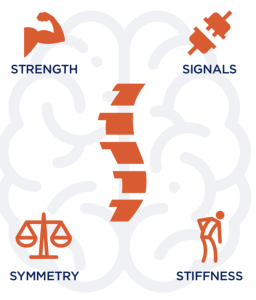
Specifically we adopt our ‘core 4’ areas of assessment, and combine them with specific functional movement screens for your sport – keep reading below for some more information on this. But first I would emphasise that this approach is best provided when it is an athlete who is assessing and treating you!
Meet Jsai Foulkes, our in house athlete at clinic!

Originally from Birmingham, he graduated from London South Bank University with a First Class honours degree in Chiropractic. His interest in chiropractic began through personal sporting injuries which were resolved with treatment. These experiences inspired him to pursue a career helping others recover, regain function and improve their wellbeing.
“I practise diversified chiropractic, incorporating additional techniques such as cupping, kinesiology taping and instrument-assisted soft tissue mobilisation (IASTM), where appropriate to each patient’s needs. Having participated in various sports, including martial arts, basketball and, more recently, javelin, I have developed a particular passion for athletics, sports rehabilitation and neurology. Attending sporting events has further strengthened my interest in helping athletes manage injuries, optimise recovery and return to the activities they enjoy.”
Jsai is available for a unique Sports Chiropractic assessment at clinic,
Which involves:
– Case history with focus on injury mechanics and sporting requirements
– A thorough Chiropractic examination as normal
– A functional movement assessment to identify areas of dysfunction specific to your sport
– A plan of action
– Treatment and after care advice specific to you and your sport
The Functional Movement Screen is really the key when assessing an athlete – however we must combine it with the other areas to give more information on the best plan for you.
If you’re still reading at this point, I guess you’re keen for a bit more information! Here’s some thoughts on part of that approach….
Strength
Strength can be used to convey many different things for different people, in different tasks. Would you compare the strength shown by the world’s strongest man in a squat, to the strength shown by someone serving an ace in tennis?
For now I want you to understand that there are 3 strength principles we use to help our patients do that
- Physical strength
For this we are referring to the increased amount of force you can actually use in your body, and this is more of a common sense statement as we said above, the stronger your back is the better. If your back is strong then you have more power to use in day to day tasks, and therefore you are less likely to get injured in simple tasks such as moving furniture around the house or lifting boxes – you have a higher level of tolerance.
However sometimes it is a downfall, the stronger your muscles are, the worse the impact can be if they are not working at the same level from side to side, as they will pull your body out of line with more effect.
To increase your physical strength we:
- Align your body and make sure everything is symmetrical.
- Ensure you are activating the correct muscle groups and do not have any faulty recruitment patterns i.e. using your hamstrings instead of your glutes.
- Guide you in terms of optimally training to make further improvements i.e. after a full examination we can figure out the exact angle that your hips and feet need to be in a squat, or exactly how deep you should go for your body.
- Endurance strength
This is another fairly easy concept, but we will put it into a specific example. You have different sets of muscle fibres in your body and one set are specifically designed for endurance work. In terms of injury this normally happens after repetitive tasks and the muscles are reaching the end of their endurance capacity. And at this point the body becomes susceptible to injury.
If you are an athlete or are going to be pushing yourself you need to have a higher level of endurance to meet the demands you are setting upon your body. We have specific tests for your spine to ensure your spinal endurance is not going to be your limiting factor.
- Proprioceptive control and reaction
Proprio-what? If you aren’t sure what this is I can guarantee you that you actually do, and have in fact been learning it from a very early age when you started trying to crawl! Let’s do a simple task to show you what proprioception is.
Task 1.
Read this through first and then perform the steps.
- Place your hand out in front of you and make a thumbs up sign.
- Close your eyes.
- Now turn your hand to point your thumb to the ground.
- When it is there open your eyes to check where it ended up.
How did you know when it was ready to open your eyes? That was proprioception telling you. Your joints have movement and position sensors in them which tell your body exactly where they are. So with your thumb your body knew what position it was in and you even knew where to look and would have looked straight at your hand.
Control and reaction are what your body does with that proprioceptive (motion sensor) input and it uses it to form our auto-pilot movement systems.
A day to day example for our auto-pilot doing our jobs for us is simple tasks such as walking, standing from sitting, or catching something before we drop it (possibly a sign of bad proprioception if we dropped it in the first place!). You don’t have to think ‘I’m going to contract my thigh muscles as I stabilise my core and take a step forwards’ your body just does it!
Task 2
An awesome example of proprioceptive information and control working at its optimum is with gymnasts and divers, performing such complex routines with immense precision. But for this example all you need is yourself and a ball to test your proprioception!
- Sit down or stand in a room with enough height to throw a ball up by about a metre
- Start by throwing the ball up in an arc from right hand to left hand to gauge the force (throw it as high as you like!)
- Now when you are ready close your eyes as the ball hits the peak of its flight and catch it with the eyes closed.
This is testing whether your body can interpret information coming in, and use it to move your hand to where it needs to be at the correct time.
When proprioception goes wrong
Bad proprioception can either come from sending the wrong messages to start with, then getting delayed, or receiving poor feedback information to decide what to do.
An example of sending the wrong information (poor proprioception) in the first place can be like turning on the sprinklers in the garden but the wrong one comes on, not watering the intended area. Or if we think about there being a delay in the speed of the signal being sent we can think of it like a kink in the hose pipe causing the water to stop or not flow well.
Specifically if all the signals do not come together at the same time there might be a delay at either end of the proprioceptive system – either with a delay in the information coming in to your brain for assessment from your body, or a delay going to the muscles which have to react and respond.
What do we know?
In summary, to be functioning at your best you need to have the right information coming in to your body so that your brain can send the correct messages through the nerves to your muscles to do the job. If there are any spinal problems which are causing a ‘kink in the hosepipe’ neurologically then we can correct that with Chiropractic treatment.
In order for you to be performing at your best the muscles also need to be physically strong enough to do the task, and also have good endurance to continue to do that task. We ensure you have the right exercises and can activate the correct muscles to perform the exercises to achieve this, through targeted rehabilitation and specific advice.
Remember though, this is just one of the key areas in which you can get gains in performance from Chiropractic care.
At Chellaston Chiropractic Clinic we assess the above cycles in your body and spine to ensure that there are no blockages in the road on your journey to increasing your performance. Check out our appointment availability or call us to book in to increase your sporting performance now!
Other posts
Andrew made me feel comfortable immediately, listening carefully and giving me time to explain my concerns. He asked questions to elicit the exact nature of my problems and after treatment gave me advice on how to avoid problems in the future. His understanding, patience, and holistic approach has ensured I got better after treatment and also am able to keep active and fit. - Kate Tollervey
I have seen a lot of people over the years and like Andrew’s approach as he is extremely logical and always finds the root cause of the problem. Very happy to be back on the golf course. - Sam Warrington
Andrew dealt with me in a professional manor and was incredibly knowledgeable and thorough in his treatment. Highly recommended. Thank you very much. - Christine Charles
I have been treated by him over the last 6 years and have always been very impressed. - Robert Cooper